As we navigate through 2026, the reliance on high-speed data and seamless connectivity has transitioned from a competitive advantage to a fundamental operational requirement. For small businesses in South Florida: ranging from bustling retail hubs in Miami to expansive warehouses in Fort Lauderdale: the physical network infrastructure serves as the silent engine driving growth. In this era of ubiquitous AI integration and high-bandwidth cloud applications, structured cabling services are no longer just about "running wires"; they are about engineering a resilient, future-proof platform capable of supporting the next decade of technological evolution.
We delve into the emerging trends of 2026, equipping facility managers and business owners with the technical insights necessary to navigate the complexities of modern network design. From the adoption of Category 8 copper to the strategic deployment of fiber optics, we explore how professional installation ensures long-term success in an increasingly connected landscape.
The Evolution of Copper: Cat6a and the Niche for Cat8
For many years, Category 6 (Cat6) was the standard for internal office networks. However, in 2026, the baseline for it solutions for small business has shifted decisively toward Cat6a. Supporting 10-Gigabit speeds over distances up to 100 meters, Cat6a provides the thermal management and crosstalk protection required for modern high-power PoE (Power over Ethernet) applications.
While Cat6a handles the majority of workstation and general office needs, Category 8 (Cat8) has emerged as a specialized solution for specific high-performance environments. Cat8 supports speeds of up to 40Gbps, but it is limited by a maximum distance of 30 meters. This makes it an ideal choice for:
- Data Center Racks: Connecting servers to switches within the same or adjacent racks.
- Edge Computing Hubs: Supporting localized AI processing units that require extreme low latency.
- Future-Proofing Server Rooms: Providing a massive bandwidth headroom for core infrastructure components.
Selecting the right medium is a balance of cost-efficiency and technical requirements. While Cat8 offers superior speed, its cost and distance limitations mean it should be deployed strategically rather than globally.

Fiber Optics: Moving Beyond the Backbone
While copper remains the standard for horizontal runs (to the desk), 2026 has seen a significant increase in Fiber-to-the-Edge (FTTE) deployments. Traditionally reserved for building backbones or connecting data centers, fiber optics are now being extended closer to the end-user.
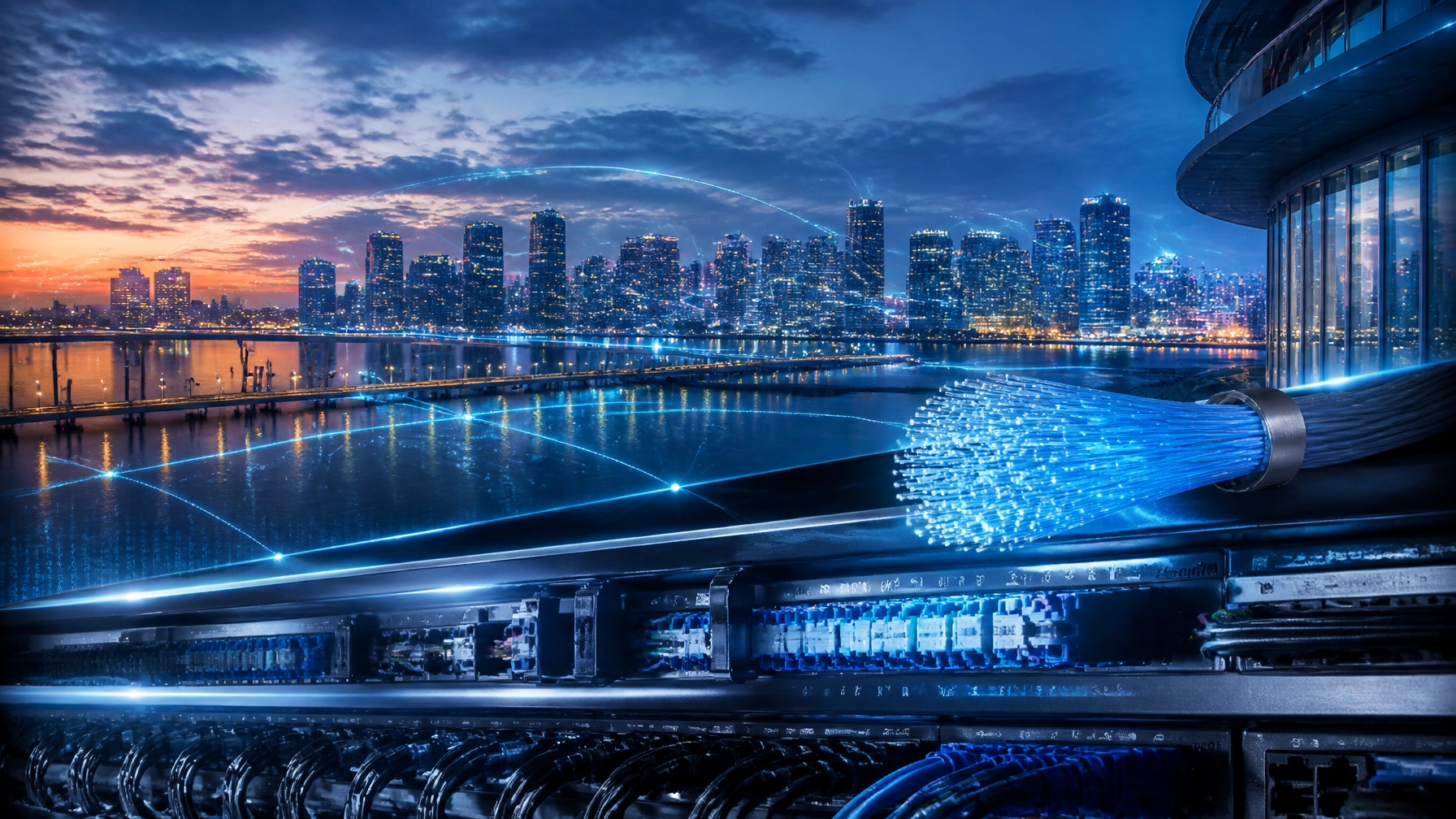
The advantages of fiber in a South Florida environment are manifold. Unlike copper, fiber is immune to electromagnetic interference (EMI) and is not susceptible to the electrical surges that often accompany the region's frequent lightning storms. Furthermore, single-mode fiber (OS2) and multimode fiber (OM4/OM5) offer virtually unlimited bandwidth potential, ensuring that your structured cabling services investment will remain relevant even as Wi-Fi 7 and 8 standards become mainstream.
Implementing fiber at the edge: such as connecting high-resolution security camera systems or high-density wireless network installation: minimizes latency and maximizes reliability for mission-critical operations.
Power over Ethernet (PoE++) and the Smart Building
The role of cabling has expanded from data transmission to power delivery. The 802.3bt standard, commonly known as PoE++, can now deliver up to 90W of power over a single ethernet cable. This trend is central to the "Smart Building" movement, where a single cable supports:
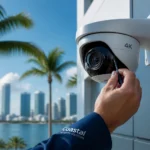
- Security Cameras: Powering advanced AI-driven 4K cameras with motorized pan-tilt-zoom (PTZ) functions.
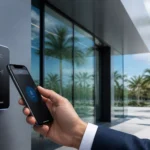
- Access Control: Fueling smart locks and biometric readers at entry points.
- Wireless Access Points: Providing the high power required for modern Wi-Fi 6E and Wi-Fi 7 hardware.
- Smart Lighting: Enabling energy-efficient LED lighting systems that are controlled and powered via the network.
For facility managers, this convergence simplifies maintenance. However, it requires a higher standard of cable: specifically shielded Cat6a: to dissipate the heat generated by large bundles of PoE-enabled cables.
South Florida Resilience: Hurricane Preparedness for Networks
Infrastructure in South Florida faces unique environmental challenges that must be addressed during the design phase. A professional low voltage provider must consider hurricane resilience and high humidity as primary factors.
1. Hardened Path and Conduit
External network components, such as those used for gate access control or outdoor surveillance, must be housed in NEMA-rated, weather-sealed enclosures. Conduits should be watertight and properly anchored to withstand high wind loads.
2. Strategic MDF/IDF Placement
The Main Distribution Frame (MDF) and Intermediate Distribution Frames (IDF) should be located in interior rooms, ideally above the ground floor to mitigate flood risk. In South Florida, "hardening" these spaces includes ensuring they are on a backup power circuit (UPS or generator) and have dedicated climate control to manage the region's intense humidity, which can lead to premature hardware corrosion.
3. Material Selection
In coastal areas, salt-air corrosion is a genuine threat. Utilizing stainless steel hardware for outdoor mountings and specifying UV-rated, gel-filled cables for exterior runs prevents signal degradation over time.

Retrofits vs. New Construction: A Strategic Approach
Whether you are building a new facility in Doral or upgrading a historic office in Coral Gables, the strategy for structured cabling varies.
- New Construction: This offers the opportunity for a "clean-slate" design. We recommend implementing high-density pathways that allow for easy cable additions in the future. Integrating wireless network installation planning at this stage ensures optimal signal coverage without dead zones.
- Retrofitting: Upgrading existing facilities often involves navigating older architectural constraints. In these scenarios, hybrid solutions: utilizing existing conduits for new fiber runs or deploying high-gain wireless bridges: can provide modern performance without the need for invasive structural changes.
Practical Recommendations for Facility Managers
To ensure the longevity and reliability of your IT infrastructure, consider the following best practices:
- Demand Certification: Ensure your provider uses specialized testing equipment, such as Fluke Certification, to verify that every link meets industry standards for speed and integrity.
- Maintain Documentation: A properly labeled and mapped cabling plant reduces troubleshooting time by up to 50% during a network outage.
- Plan for Growth: Always specify a 20-30% "slack" in your conduit and patch panel capacity to accommodate future expansion without requiring a complete overhaul.

Conclusion: Investing in Connectivity as a Strategic Asset
Structured cabling is the foundational layer upon which all other business technologies: from cloud computing to advanced security: depend. As South Florida continues to grow as a global tech and business hub, the demand for resilient, high-capacity networks will only increase. By embracing the trends of 2026, including the move toward Cat6a/Cat8, the expansion of fiber optics, and the integration of PoE++, businesses can mitigate risk and position themselves for long-term operational efficiency.
At LV8 Communications, we have been a Florida Licensed Low Voltage Provider since 2005, specializing in the design, installation, and maintenance of comprehensive technology solutions. Whether you require a sophisticated security camera system, structured cabling for a new facility, or expert it solutions for small business, our team provides the professional expertise required to protect and power your business.
To schedule a free assessment of your facility's infrastructure needs, visit our Contact Page or explore our full range of CCTV and IT services.