As the global supply chain becomes increasingly digitized and complex, the logistical hubs of South Florida: spanning from the Port of Miami to the distribution corridors of Broward and Palm Beach: face a dual challenge. Facilities must not only defend against evolving physical and cyber threats but also withstand the unique environmental pressures of a tropical climate. In 2026, warehouse security has evolved from passive recording into a proactive, intelligent ecosystem where data serves as both a shield and a strategic asset.
To maintain operational continuity and protect high-value inventory, facility managers are now required to look beyond traditional surveillance. This blueprint explores the essential components of a modern, future-proofed warehouse security strategy, emphasizing the integration of artificial intelligence, converged access control, and climate-resilient infrastructure.
The Shift Toward Proactive Intelligence: AI Video Analytics
The era of monitoring grainy, low-resolution footage after an incident has passed. In 2026, commercial security systems are defined by the convergence of 4K ultra-high-definition imaging and thermal sensors, all powered by edge-based AI analytics.
Modern security camera systems no longer function as simple recorders; they are advanced sensors capable of interpreting human and vehicle behavior in real time. We delve into three critical advancements currently reshaping warehouse surveillance:
- AI-Driven Threat Detection: Algorithms now distinguish between routine operational movements: such as a forklift navigating an aisle: and anomalous activities, such as an individual loitering near a high-value cage after hours. This precision reduces false alarms by up to 90%, allowing security teams to focus on genuine breaches.
- Thermal Imaging and Inventory Monitoring: Beyond theft prevention, thermal cameras are vital for preventative maintenance. They can detect overheating machinery or lithium-ion battery storage zones that exceed safe temperature thresholds, potentially preventing catastrophic fires before they occur.
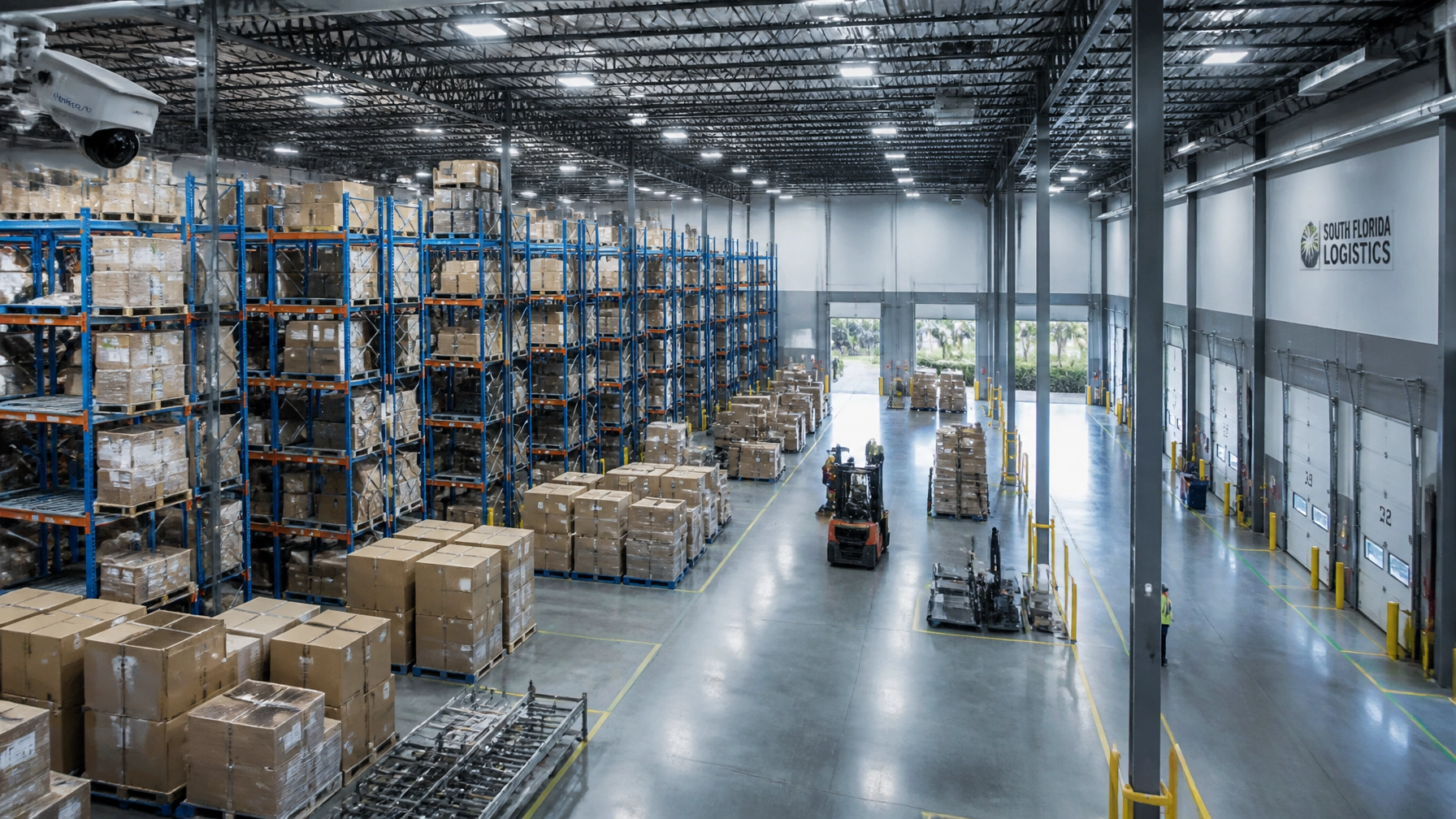
- Visual Audit Trails for Logistics: Integrated video surveillance for offices and warehouse floors allows managers to track specific pallets through their unique identifiers. If an item is flagged as missing or damaged, the system can instantly recall the exact moment it was handled, providing an indisputable digital chain of custody.

Converged Access Control: Securing the Perimeter and the Loading Dock
The loading dock remains the most vulnerable point of any distribution center. Traditional lock-and-key methods or siloed badge systems are insufficient for the high-velocity environment of 2026. Today, access control systems are fully integrated into the broader security network, creating a unified command and control interface.
By implementing cloud-based access control, facilities can manage credentials for hundreds of employees and contractors from a single dashboard. Key features of a future-proofed system include:
- Event-Linked Video Verification: Every time a credential is used at a loading dock or personnel entrance, the system automatically tags the corresponding video clip. This ensures that the person using the badge is the authorized holder, effectively eliminating "tailgating" or unauthorized entry.
- Mobile and Biometric Credentials: Warehouses are moving toward touchless entry using encrypted mobile credentials or biometric scanners. This minimizes the risk of lost or shared physical cards and provides a higher level of identity assurance.
- Dynamic Zoning: Managers can now implement role-based access that changes based on the time of day or the facility's alert status. For instance, high-value electronics sections can be automatically locked down to all but senior management during night shifts.

Climate Resilience: Engineering for the South Florida Environment
South Florida’s climate is notoriously unforgiving for electronics. High humidity, salt air corrosion, and the constant threat of hurricane-force winds require a specialized approach to hardware selection.
When selecting a low voltage provider, it is crucial to ensure that all external hardware meets rigorous IP66 or IP67 ratings for moisture and dust resistance. Furthermore, the 2026 blueprint for warehouse security includes:
- Corrosion-Resistant Housings: Cameras and readers installed near coastal areas or in semi-open loading bays must utilize specialized coatings or stainless-steel housings to prevent salt-air degradation.
- Hurricane Hardening: Mounting systems must be engineered to withstand the high wind loads typical of South Florida storms. Furthermore, redundant power supplies and industrial-grade surge protection are essential to keep security systems operational during and after severe weather events.
- Heat Dissipation: With South Florida temperatures frequently reaching extremes, outdoor and rooftop equipment must be rated for high-temperature performance to prevent thermal shutdown during the summer months.
Environmental Monitoring: Protecting Sensitive Inventory
For warehouses storing pharmaceuticals, perishables, or sensitive electronics, security extends to the environment itself. Modern security platforms now integrate IoT (Internet of Things) sensors to monitor temperature, humidity, and air quality.
If a climate control system fails or a leak is detected, the integrated security system sends an immediate alert to facility managers. This allows for rapid intervention, potentially saving millions of dollars in spoiled inventory. In 2026, environmental monitoring is no longer a separate utility; it is a fundamental component of a comprehensive risk mitigation strategy.
Infrastructure Foundations: The Role of Structured Cabling
The sophisticated AI and 4K systems described above are only as reliable as the physical network that supports them. Structured cabling serves as the nervous system of the modern warehouse.
To future-proof a facility, we recommend the implementation of CAT6a or fiber-optic backbone cabling. These standards provide the necessary bandwidth for high-resolution video streams and the low latency required for real-time AI processing. A professionally organized and labeled cabling infrastructure reduces downtime and simplifies future upgrades or maintenance, ensuring the facility remains adaptable to future technological shifts.

Strategic Blueprint for Facility Managers
Implementing a future-proof security system requires a phased, strategic approach. We advise facility managers to follow this blueprint for 2026 and beyond:
- Conduct a Comprehensive Assessment: Evaluate current vulnerabilities, including network capacity, physical entry points, and climate-related risks.
- Prioritize Integration: Avoid "bolted-on" solutions. Ensure that your cameras, access control, and environmental sensors can communicate through a single, unified platform.
- Invest in Edge Intelligence: Opt for cameras with built-in AI to reduce the load on your servers and provide faster response times.
- Harden the Network: Ensure your IT infrastructure is redundant and physically protected against both environmental factors and unauthorized access.
- Select a Licensed Expert: Partner with a provider that understands the local regulatory and environmental landscape of South Florida.
Conclusion
Future-proofing warehouse security in 2026 is an investment in both protection and operational intelligence. By transitioning from passive surveillance to an integrated, AI-driven ecosystem, South Florida businesses can mitigate risks, improve safety, and ensure long-term resilience against both human threats and the elements.
At LV8 Communications, we have been a Florida Licensed Low Voltage Provider since 2005. We specialize in providing South Florida businesses with the technical expertise needed to design, install, and maintain comprehensive security and IT solutions. For more information on how we can secure your facility, we invite you to learn more about us or contact our team for a free assessment.